
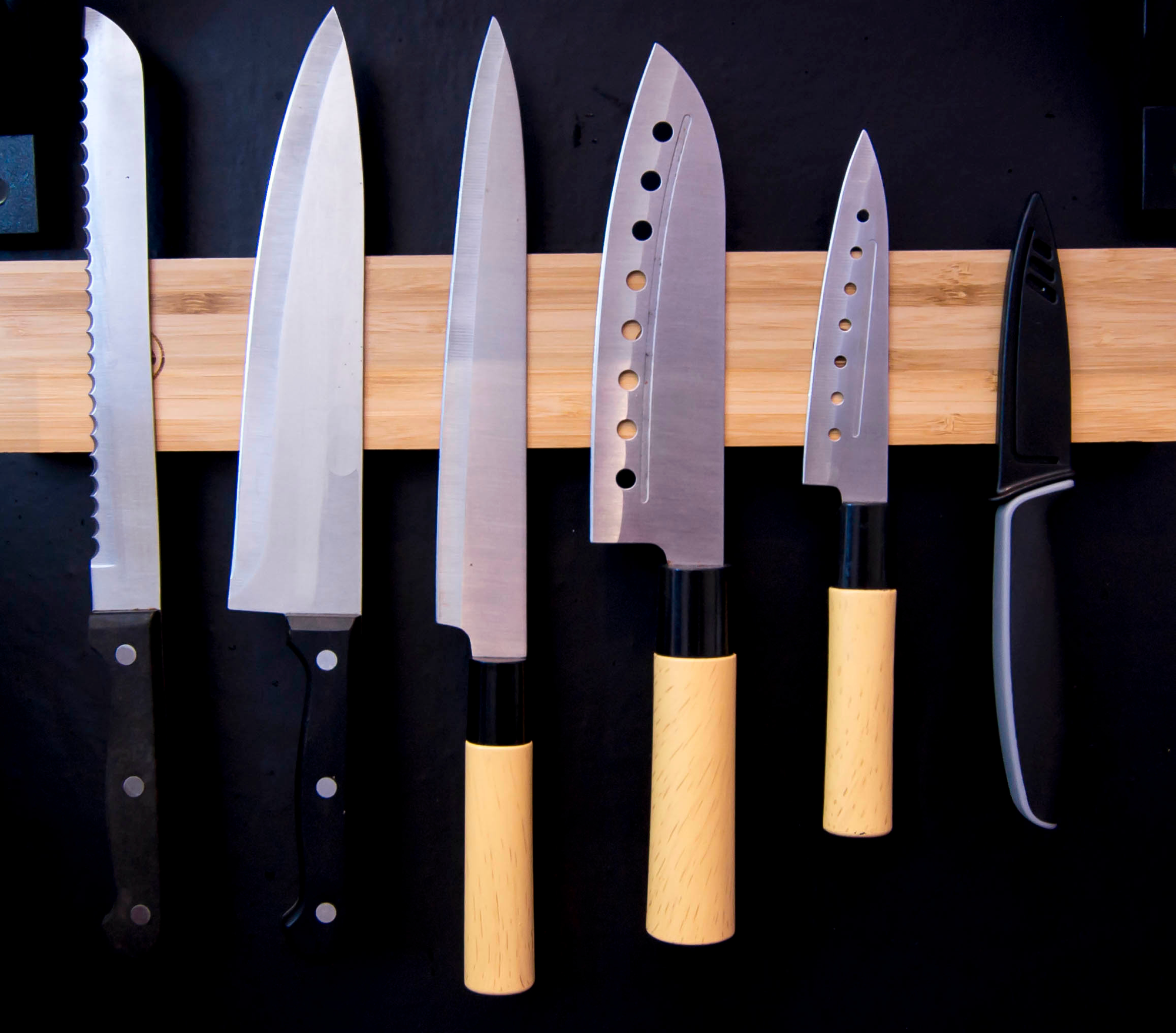
...Uses, Techniques & Best Cuts for Every Chef.
Whether you're a seasoned chef or an aspiring cook building your first professional mise en place, mastering the different shapes of kitchen knives is one of the most important steps in elevating your craft. Every knife is designed with purpose — blade length, curvature, thickness, and tip profile all work together to perform specific culinary tasks with precision, safety, and efficiency.
This detailed, SEO-optimized guide explores all essential kitchen knife shapes, how chefs use them, and which proteins or ingredients they handle best.
⭐ 1. The Chef’s Knife (Gyuto) – The Essential All-Purpose Blade
Best for: Beef, poultry, vegetables, herbs, fish, general prep
Blade Length: 8–10 inches
Shape: Broad belly, curved edge, pointed tip
The chef’s knife is the undisputed king of the kitchen. Its curved belly allows seamless rocking cuts, while the pointed tip excels at fine work. Professional chefs use it for nearly everything — slicing steak, trimming fat caps, mincing garlic, chopping aromatics, and slicing roasts.
Why chefs prefer it:
-
Versatile enough for 90% of tasks
-
Strong spine for tough cuts
-
Precision tip for delicate work
If you master only one knife, make it the chef’s knife.
⭐ 2. The Santoku – Precision for Slicing & Thin Cuts
Best for: Fish fillets, chicken breast, vegetables, herbs
Blade Length: 5–7 inches
Shape: Flat profile, sheepsfoot tip, minimal rocking
The Santoku excels at ultra-clean slicing. Its flatter edge encourages straight-down motion, making it ideal for thin beef slices (carpaccio), vegetables, and sashimi-grade fish. Many chefs choose it when they want consistency and clean, even cuts.
Unique features:
-
Grants extreme control
-
Hollow (granton) edges reduce sticking
-
Ideal for fast, repetitive prep work
⭐ 3. Paring Knife – Precision for Small Ingredients
Best for: Trimming silver skin, deveining shrimp, hulling strawberries
Blade Length: 3–4 inches
Shape: Small, agile, razor-sharp
Every chef keeps a paring knife at arm’s reach for small, delicate tasks. It’s perfect for detail work where a chef’s knife is too large.
⭐ 4. Utility Knife – The Between-Sizes Blade
Best for: Sandwich slicing, trimming proteins, smaller produce
Blade Length: 5–6 inches
Shape: Narrow, pointed, balanced
A utility knife fills the gap between a paring knife and a chef’s knife. Chefs reach for it when breaking down small cuts of meat, trimming fat, or slicing cooked proteins like flank steak or chicken breast.
⭐ 5. Boning Knife – For Deboning & Precision Meat Fabrication
Best for: Chicken, pork, lamb, beef trimming
Blade Length: 5–7 inches
Shape: Narrow, flexible (or stiff), sharply pointed
The boning knife is essential for butchery. Its slim profile allows chefs to work tightly around bones, joints, and cartilage.
Flexible boning knives → best for poultry
Stiff boning knives → best for beef, pork, lamb
Use it for:
-
Frenching lamb racks
-
Removing rib bones
-
Trimming briskets
-
Separating chicken joints
⭐ 6. Fillet Knife – Ultra-Flexible for Fish & Delicate Proteins
Best for: Fish filleting, skinning, trimming sinew
Blade Length: 6–9 inches
Shape: Long, narrow, highly flexible
Designed to glide along bone, the fillet knife is indispensable for salmon, cod, trout, and other fresh fish. Chefs use its flexibility to remove skins with precision and minimal waste.
⭐ 7. Carving Knife (Slicer) – Long, Smooth Cuts for Cooked Meats
Best for: Roasts, brisket, prime rib, turkey
Blade Length: 9–14 inches
Shape: Long and narrow with minimal flex
A carving knife creates beautiful, even slices of cooked proteins. Brisket chefs prefer long slicers for their ability to make sweeping single-stroke cuts without tearing muscle fibers.
Ideal for:
-
Slicing tri-tip
-
Cutting ribeye roasts
-
Brisket and pork loin presentation
⭐ 8. Bread Knife – Serrated Power for Tough Skins & Soft Interiors
Best for: Bread, tomatoes, citrus, melons, crusted meats
Blade Length: 8–10 inches
Shape: Serrated with long draw-cut motion
Chefs use bread knives on more than bread. Serrated teeth excel at cutting through crusts, seared meat bark, and soft items that would crush under straight blades.
⭐ 9. Cleaver – Heavy Duty, Bone-Crushing Strength
Best for: Breaking bones, cutting ribs, splitting poultry
Blade Length: 6–9 inches
Shape: Thick, rectangular, extremely heavy
Chinese-style cleavers (thin) are for slicing; Western cleavers (thick) are for butchery power.
⭐ 10. Nakiri – The Vegetable Specialist
Best for: All vegetable prep, chiffonade, large-volume chopping
Blade Length: 6–7 inches
Shape: Flat, rectangular, double-beveled
Chefs reach for the nakiri when prepping vegetables at scale. It chops cleanly without wedging or cracking produce.
⭐ 11. Steak Knife – The Table Knife for Finished Proteins
Best for: Steaks, chops, brisket slices
Blade Length: 4–5 inches
Shape: Serrated or straight-edge, pointed tip
Unlike other knives on this list, steak knives are used at the table, not in prep. But for chefs, selecting the right steak knife is a matter of presentation and diner experience.
Straight-edge steak knives:
-
Cleaner cuts
-
Better for high-end beef
Serrated steak knives:
-
Stay sharp longer
-
Ideal for crusted steaks
⭐ 12. Butcher Knife (Scimitar) – The Protein Breakdown Specialist
Best for: Ribs, brisket trimming, large primal cuts
Blade Length: 10–14 inches
Shape: Curved trailing point, long slicing edge
The scimitar is a butcher’s go-to knife for trimming fat caps, breaking down primals, and portioning steaks.
⭐ 13. Skinning Knife – For Hides & Thick Skins
Best for: Game meat, poultry skins, brisket bark removal
Blade Length: 5–6 inches
Shape: Rounded belly, razor edge
Hunters and pitmasters use skinning knives to remove tough outer layers cleanly.
⭐ 14. Tomato/Utility Serrated Knife – Small Tasks That Need Bite
Best for: Tomato skins, citrus segmentation, crusty small items
Small serrated knives are used frequently for garnishes and delicate slicing.
🍽️ Which Knife Should Aspiring Chefs Master First?
-
Chef’s Knife
-
Paring Knife
-
Boning Knife
-
Slicer
-
Bread Knife
Master these five and you can handle virtually any kitchen task.
⭐ Knife Maintenance (SEO section)
(SEO Keywords: sharpening knives, honing steel, chef knife care)
A knife is only as good as its edge. Chefs maintain their knives through:
-
Regular honing
-
Weekly sharpening
-
Hand washing only
-
Proper storage (sheath or magnetic strip)
🔪 Final Thoughts: Choosing the Right Knife for the Right Cut
Understanding knife shapes isn't just chef knowledge — it's a gateway to speed, precision, and culinary craftsmanship. Whether you're slicing brisket, trimming a ribeye, filleting a salmon, or carving a holiday roast, the right knife shape transforms the experience.
Share:
Selecting the Right Regional Dry Rubs for Beef
AI and I Review Bourbon - Stagg