What Makes a Salt a Fleur de Sel? Understanding the World's Finest Finishing Salts
The Story Behind One of the World's Most Prized Gourmet Salts
Among chefs, pitmasters, bakers, chocolatiers, and culinary enthusiasts, few ingredients command as much respect as Fleur de Sel. Often referred to as the "caviar of salts," Fleur de Sel is prized for its delicate crystals, natural moisture, complex mineral character, and ability to elevate both simple and sophisticated dishes.
But what exactly makes a salt a Fleur de Sel?
Is it harvested in France? Does it need to come from a specific region? Is it simply a premium sea salt?
The answer may surprise you.
Fleur de Sel is not defined by where it comes from. Rather, Fleur de Sel is defined by how it is formed and harvested. Today, exceptional Fleur de Sel is produced not only in France but also in Mexico, Guatemala, Portugal, Spain, California, and other coastal regions around the world.
Understanding what makes Fleur de Sel unique helps explain why it remains one of the most sought-after finishing salts available.

What Is Fleur de Sel?
The term Fleur de Sel translates from French as "Flower of Salt."
The name refers to the delicate layer of salt crystals that naturally forms on the surface of seawater evaporation ponds under ideal weather conditions.
Unlike ordinary sea salt, which settles and accumulates below the surface, Fleur de Sel forms as a thin, fragile crust floating on top of the brine.
To qualify as Fleur de Sel, the salt must typically:
-
Form naturally on the surface of seawater evaporation ponds
-
Develop as delicate floating crystals
-
Be harvested by hand
-
Be collected from the surface before sinking
-
Retain some natural moisture
-
Remain minimally processed
These conditions create a salt with exceptional texture, complexity, and culinary value.
In simple terms:
All Fleur de Sel is sea salt, but not all sea salt is Fleur de Sel.
Why Harvesting Matters
The harvesting process is what separates Fleur de Sel from ordinary sea salt.
Most sea salt production focuses on collecting the salt that settles throughout the evaporation ponds. Fleur de Sel, however, represents only a small portion of the total harvest.
Harvesters must carefully monitor:
-
Temperature
-
Humidity
-
Wind
-
Salinity
-
Water depth
When conditions are perfect, delicate crystals form on the surface. These crystals are then gently skimmed by hand before they dissolve, sink, or become damaged.
Because yields are limited and harvesting requires skill and timing, Fleur de Sel is often considered one of the most labor-intensive salts in the world.
This rarity contributes to its premium status among chefs and gourmet food producers.
French Fleur de Sel: The Original Standard
When most people hear Fleur de Sel, they immediately think of France.
France is home to some of the world's most famous salt marshes, particularly in regions such as:
-
Guérande
-
Camargue
-
Île de Ré
For centuries, French salt farmers have harvested Fleur de Sel using traditional methods passed down through generations.
French Fleur de Sel is often characterized by:
-
Delicate crystals
-
High moisture content
-
Complex mineral flavor
-
Subtle oceanic notes
-
Exceptional finishing qualities
Its reputation has made French Fleur de Sel the benchmark against which many other Fleur de Sel salts are measured.
Mexican Fleur de Sel: Bright, Clean, and Coastal
Mexico has quietly become one of the world's most respected producers of artisan sea salts and Fleur de Sel.
Harvested from coastal salt flats and evaporation ponds along Mexico's Pacific coast and the Sea of Cortez, Mexican Fleur de Sel offers a clean and vibrant flavor profile that many chefs appreciate for seafood and fresh preparations.
Common characteristics include:
-
Crisp texture
-
Bright salinity
-
Balanced mineral character
-
Excellent versatility
Mexican Fleur de Sel pairs beautifully with:
-
Grilled fish
-
Shrimp
-
Oysters
-
Ceviche
-
Margaritas
-
Fresh vegetables
Its clean finish makes it particularly popular among chefs seeking a finishing salt that enhances rather than dominates.
Guatemalan Fleur de Sel: A Rising Gourmet Treasure
Although less widely known than its French counterpart, Guatemalan Fleur de Sel is rapidly gaining recognition among culinary professionals.
Harvested from the Pacific waters of Central America, Guatemalan Fleur de Sel benefits from a unique combination of climate, ocean conditions, and traditional harvesting practices.
Guatemalan Fleur de Sel often delivers:
-
Pronounced mineral complexity
-
Slight earthy undertones
-
Delicate crystalline texture
-
Balanced moisture content
Its depth of flavor makes it particularly well suited for:
-
Grilled steaks
-
Live-fire cooking
-
Roasted vegetables
-
Artisan breads
-
Gourmet finishing applications
As chefs continue to explore premium salts from around the world, Guatemalan Fleur de Sel is becoming one of the most exciting emerging options.
Looking Ahead: Portuguese and Spanish Fleur de Sel
Some of the finest salt-producing regions in Europe are found along the Atlantic and Mediterranean coasts of Portugal and Spain.
Traditional salt marshes in these regions have produced artisan sea salts for centuries, and Fleur de Sel production continues to grow in popularity among chefs and gourmet food enthusiasts.
Portuguese and Spanish Fleur de Sel are often recognized for:
-
Beautiful crystal formation
-
Balanced salinity
-
Clean ocean flavor
-
Exceptional finishing texture
As interest in premium finishing salts expands globally, these regions continue to establish themselves among the world's elite Fleur de Sel producers.
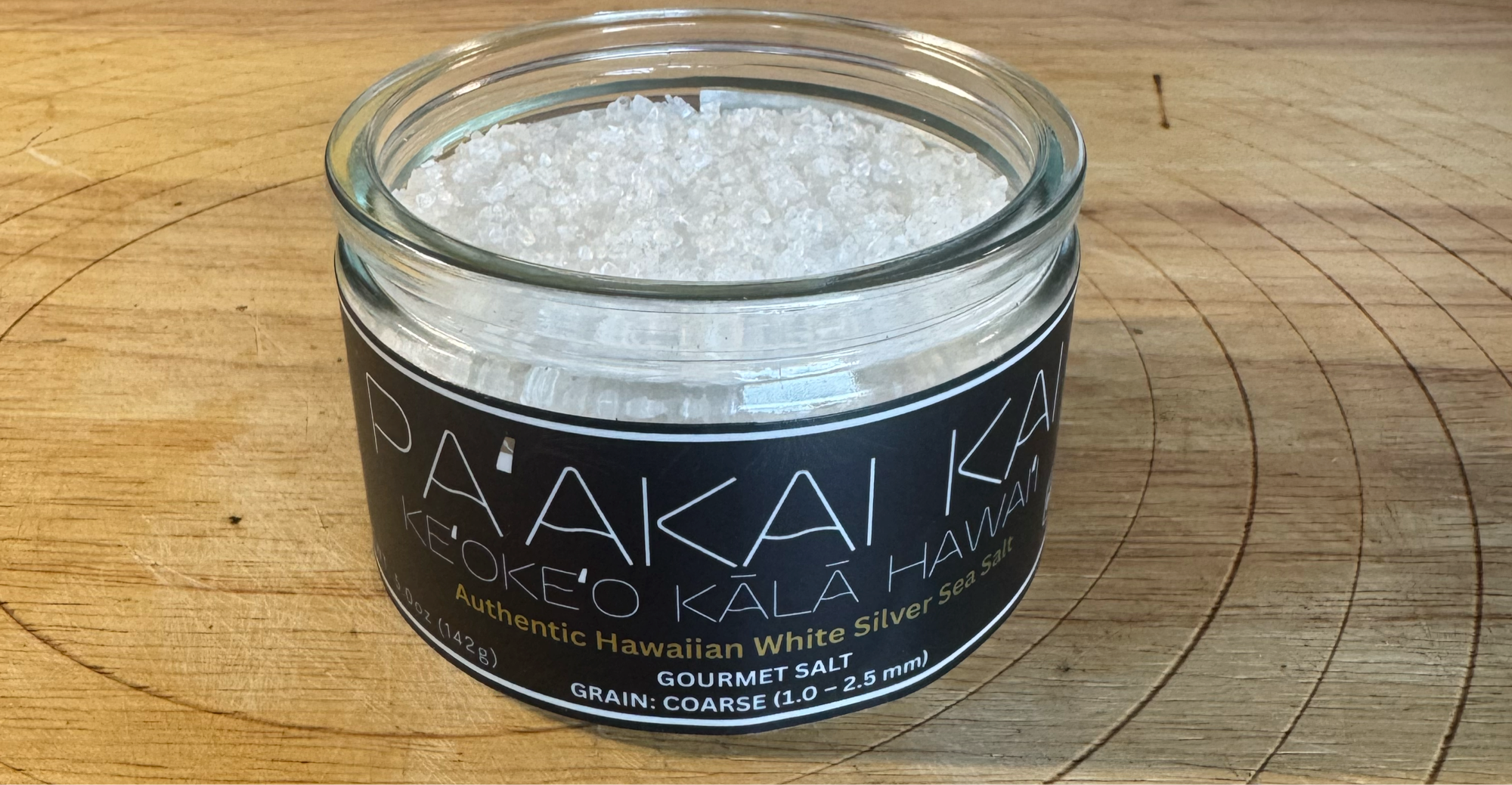
Can Hawaiian Sea Salt Be Fleur de Sel?
This is one of the most common questions among gourmet salt enthusiasts.
The answer is:
Yes, Hawaiian sea salt can be Fleur de Sel if it is harvested using the traditional Fleur de Sel harvesting method.
However, not all Hawaiian sea salt qualifies as Fleur de Sel.
Authentic Hawaiian sea salts are often harvested from Hawaiian ocean waters and may be solar evaporated while retaining valuable trace minerals and natural moisture.
For a Hawaiian salt to be considered Fleur de Sel, it would need to be:
-
Formed on the surface of the evaporation pond
-
Hand harvested from the top layer
-
Collected as delicate floating crystals
Without that specific harvesting process, the salt remains an authentic Hawaiian sea salt but is not technically Fleur de Sel.
Fleur de Sel vs. Grey Salt
Consumers often confuse Fleur de Sel with French Grey Salt, but they are very different products.
Fleur de Sel
-
Harvested from the surface
-
Delicate crystal structure
-
Higher value
-
Primarily used as a finishing salt
Grey Salt (Sel Gris)
-
Harvested from the bottom of the salt pond
-
Larger, denser crystals
-
Higher moisture content
-
More robust mineral flavor
-
Often used for cooking as well as finishing
Both are excellent salts, but Fleur de Sel is generally considered the more delicate and refined of the two.
Fleur de Sel vs. Hawaiian Sea Salt
|
Characteristic |
Fleur de Sel |
Hawaiian Sea Salt |
|
Defined By |
Harvesting Method |
Geographic Origin |
|
Crystal Formation |
Surface Crystals |
Various Methods |
|
Moisture |
Moderate to High |
Varies |
|
Texture |
Delicate |
Fine to Coarse |
|
Primary Use |
Finishing |
Cooking & Finishing |
|
Origin |
Multiple Countries |
Hawaiian Islands |
The two are not competitors as much as they are different expressions of premium sea salt craftsmanship.
Fleur de Sel vs. Maldon Salt
Another common comparison is Fleur de Sel versus Maldon Salt.
Maldon Salt is famous for its distinctive pyramid-shaped flakes and is widely used by chefs throughout the world.
Fleur de Sel
-
Naturally forms on brine surface
-
Moist crystals
-
Mineral complexity
-
Traditional hand harvesting
Maldon Salt
-
Manufactured through a controlled evaporation process
-
Large pyramid flakes
-
Crisp texture
-
Clean salinity
Both are exceptional finishing salts, but they deliver different textures and culinary experiences.
Best Fleur de Sel for Steak
For steak, many chefs prefer Fleur de Sel varieties with slightly greater mineral depth.
Excellent choices include:
-
Guatemalan Fleur de Sel
-
French Fleur de Sel
-
Portuguese Fleur de Sel
The crunchy crystals and natural moisture create a finishing touch that enhances beef without masking its flavor.
Best Fleur de Sel for Seafood
Seafood benefits from cleaner, brighter finishing salts.
Top choices include:
-
Mexican Fleur de Sel
-
French Fleur de Sel
-
Spanish Fleur de Sel
These salts complement fish, shellfish, oysters, and ceviche while allowing delicate flavors to shine.
Best Fleur de Sel for Chocolate and Desserts
The contrast between sweet and salty is one of the great culinary pairings.
Fleur de Sel is frequently used in:
-
Chocolate truffles
-
Caramel
-
Brownies
-
Chocolate chip cookies
-
Ice cream
-
Pastries
French Fleur de Sel remains the traditional favorite for pastry chefs, although Mexican and Portuguese Fleur de Sel are increasingly popular alternatives.
Best Fleur de Sel for Cocktails
Craft cocktail programs increasingly incorporate Fleur de Sel for:
-
Margarita rims
-
Bourbon cocktails
-
Salted caramel cocktails
-
Tropical drinks
Mexican Fleur de Sel is particularly popular because of its clean finish and compatibility with tequila and mezcal-based beverages.
The Final Verdict
Fleur de Sel is not simply a premium sea salt—it is a reflection of a centuries-old harvesting tradition that captures the most delicate crystals nature produces.
Whether harvested in France, Mexico, Guatemala, Portugal, Spain, or elsewhere, true Fleur de Sel is defined by its formation on the surface of evaporation ponds and its careful hand harvesting.
Each region offers its own expression of this remarkable finishing salt, shaped by climate, geography, seawater composition, and local tradition.
For chefs, pitmasters, bakers, and culinary enthusiasts, Fleur de Sel remains one of the world's finest finishing ingredients—proof that sometimes the simplest ingredients can make the greatest impact.